
Industrial Hygiene Surveys
Workplace exposure monitoring for noise, air contaminants, silica and chemical hazards, with written results you can act on.
What to Expect
Industrial hygiene is the measurement side of workplace health: establishing what your people are actually being exposed to, rather than assuming. We conduct exposure monitoring for noise, airborne contaminants, respirable crystalline silica and other chemical hazards, compare the results against the applicable permissible exposure limits and action levels, and deliver a written survey that tells you where you stand and what to do about it.
- Common standards
- 29 CFR 1910.95 (noise), 1910.1000 (air contaminants), 1910.1053 and 1926.1153 (respirable crystalline silica)
- Who needs it
- Employers with potential overexposure, a hearing conservation obligation, or a substance-specific monitoring requirement
- Deliverable
- Written survey with measured results, comparison to exposure limits and prioritised recommendations
Monitoring is what triggers the rest of the program
Several standards key their requirements to measured exposure. Noise at or above an eight-hour time-weighted average of 85 decibels triggers a hearing conservation program including audiometric testing. Silica has its own action level and permissible exposure limit with associated controls and medical surveillance. Without monitoring you cannot know which obligations you have already incurred — and 'we assumed we were below the limit' is not a defence anyone has had much success with.
Results you can act on
A survey that reports numbers without context is of limited use. Ours states what was measured, how and for how long, how it compares to the applicable limit, and what the practical options are — ranked by the hierarchy of controls, so engineering solutions come before a recommendation to issue respirators.
What the course covers
- Noise exposure monitoring and dosimetry
- Airborne contaminant sampling and analysis
- Respirable crystalline silica exposure assessment
- Comparison against permissible exposure limits and action levels
- Hearing conservation program evaluation
- Ventilation and engineering control assessment
- Respiratory protection program support
- Written survey reports with prioritised recommendations
- Quantified Exposure Data
- Noise and Air Sampling
- Silica Assessment
- Hierarchy of Controls Approach
- Written Survey Report
- Nationwide Service
Trusted Since 2014
Disabled Veteran-Owned Small Business — serving clients nationwide.
Request a Free Consultation
Fill out the form below and we'll be in touch within one business day.

What Our Clients Said
- Expert Safety Training
- Customized Safety Programs
- OSHA Compliance Support
- Industrial Hygiene Surveys
- Onsite Safety Inspections
- Written Safety Program Development
“Brad and his team are very helpful and knowledgeable. They came to our job site and conducted safety training that was not only thorough and compliant, but genuinely engaging for our crew. I highly recommend BHG Safety Partners to any company that takes workplace safety seriously.”
Industrial Hygiene Surveys Questions
We get a lot of the same great questions from new clients. Here are the answers to the ones we hear most often — if yours isn't listed, don't hesitate to reach out directly.
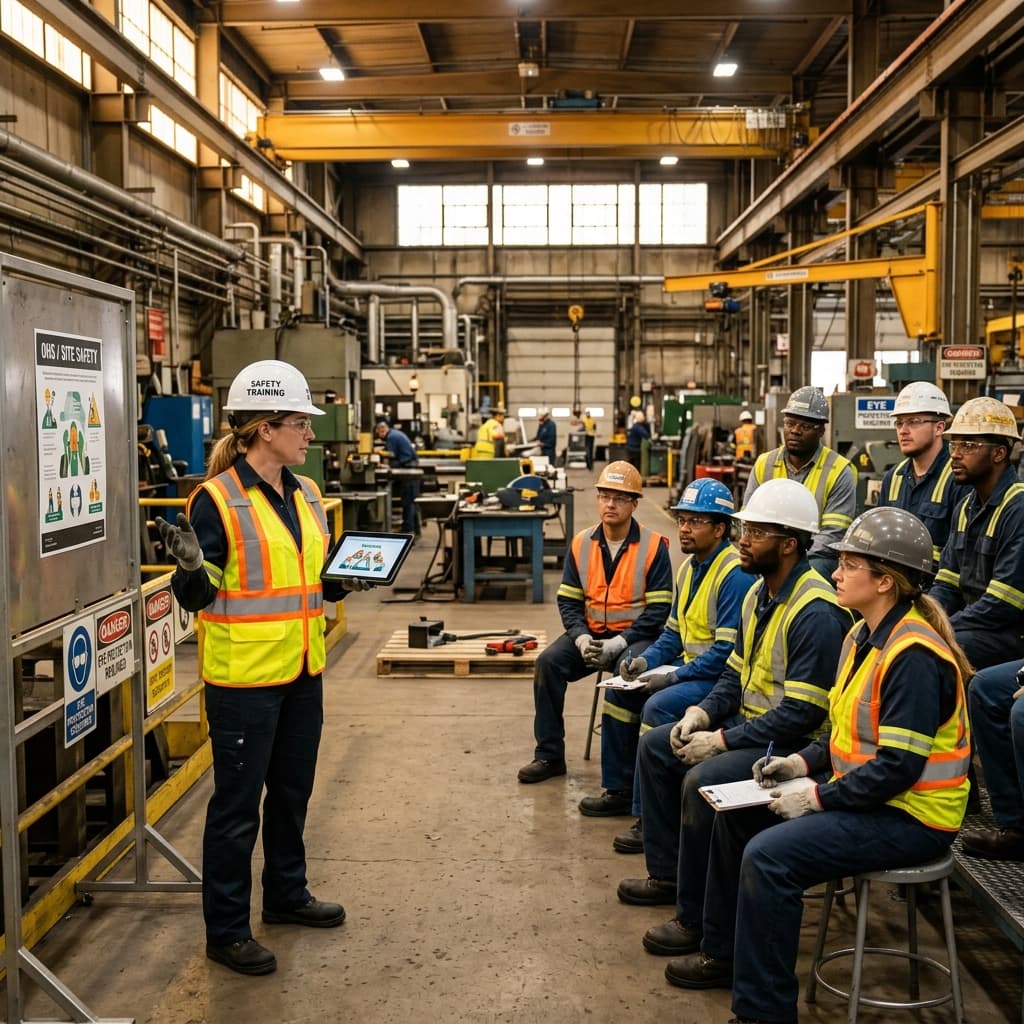
Onsite Safety Training Session