
HAZWOPER Training
HAZWOPER 40-hour, 24-hour, 8-hour supervisor and annual refresher training for hazardous waste and emergency response work, per 29 CFR 1910.120.
What to Expect
HAZWOPER covers workers involved in hazardous waste operations and emergency response. Which course a worker needs depends on the work: 40 hours for those regularly on site with potential exposure above permissible limits, 24 hours for occasional site workers or those in areas monitored below exposure limits, an additional 8 hours for supervisors, and an 8-hour refresher every year to stay current. We deliver all four and help you work out who needs which.
- Standard
- 29 CFR 1910.120 — Hazardous Waste Operations and Emergency Response
- 40-hour
- Workers regularly on site with potential exposure above permissible limits
- 24-hour
- Occasional site workers, or workers in areas monitored below exposure limits
- Refresher
- 8 hours annually to maintain currency; supervisors need an additional 8 hours
- Format
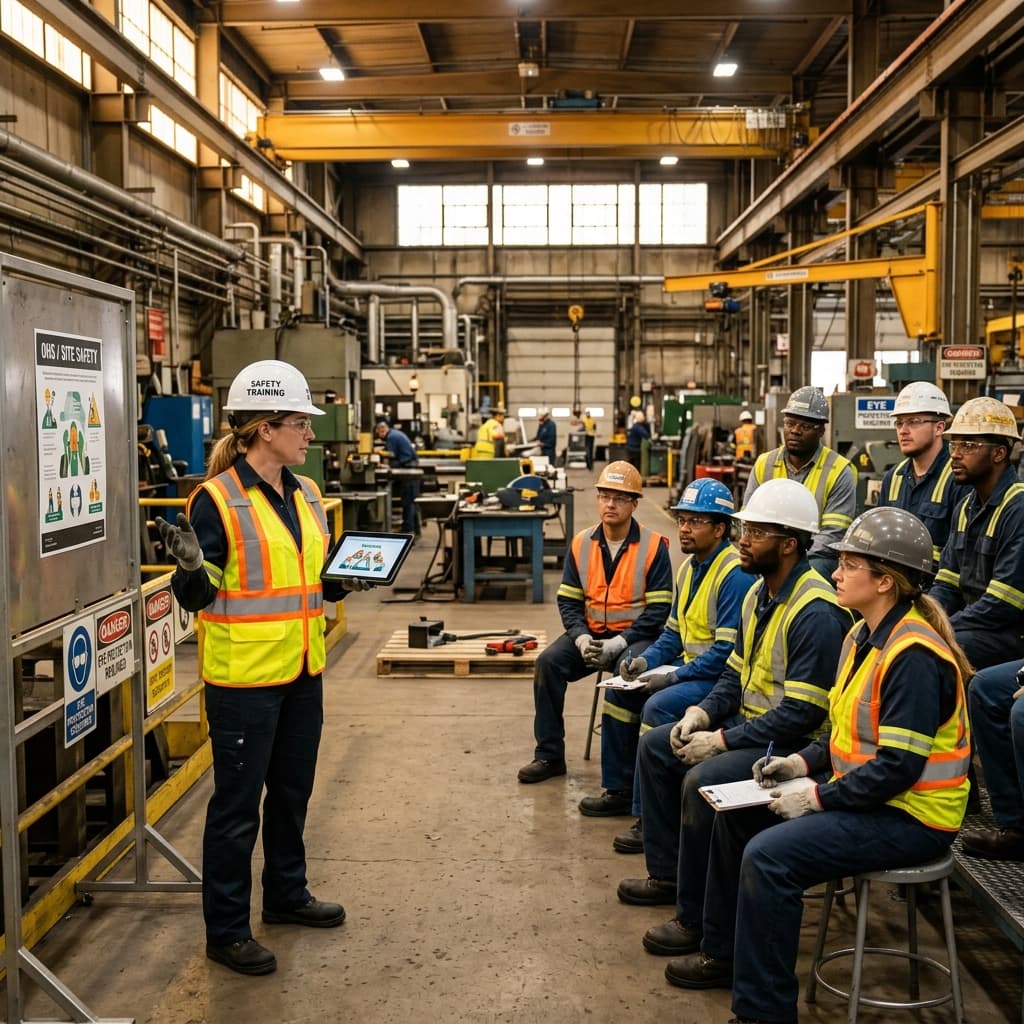
- Delivered onsite at your facility or job site, or by live virtual session with Q&A and documentation.
Working out which course a worker needs
This is where most organisations get it wrong. The determining factor is the worker's actual exposure potential and how often they are on site, not their job title. A worker who is on a hazardous waste site regularly, in an area where exposure could exceed permissible limits, needs the 40-hour course plus supervised field experience. Someone who visits occasionally, in a monitored area confirmed below exposure limits, may need only 24. We can walk your roles through the decision with you.
Refreshers are not optional
The standard requires eight hours of refresher training every year, and the requirement does not reset just because a site has been quiet. Letting a refresher lapse is one of the more common findings in this area, and it is straightforward to prevent with a tracked annual schedule.
Site-specific training still sits with the employer
HAZWOPER courses cover the general requirements, but the standard also expects workers to be trained on the specific site safety and health plan, the hazards present, and the equipment they will use. That portion is site-specific by definition — we can help you build it, but it cannot be satisfied by a generic course alone.
What the course covers
- Site characterisation and analysis
- Site safety and health plans
- Hazard recognition, toxicology and exposure limits
- Air monitoring and environmental sampling
- Personal protective equipment selection and levels of protection
- Decontamination procedures
- Confined space entry on hazardous waste sites
- Emergency response, spill containment and the incident command system
- 40, 24 and 8-Hour Courses
- Annual Refresher Training
- Supervisor Add-On
- Built on 1910.120
- Help Assigning the Right Course
- Onsite or Virtual Delivery
Trusted Since 2014
Disabled Veteran-Owned Small Business — serving clients nationwide.
Request a Free Consultation
Fill out the form below and we'll be in touch within one business day.
Other courses we deliver
- Workplace Safety TrainingHands-on and classroom safety training to build worker awareness and support OSHA-aligned job performance.
- Confined Space Entry TrainingPermit-required confined space training for entrants, attendants and entry supervisors, built on 29 CFR 1910.146 and 1926 Subpart AA.
- First Aid and CPR TrainingWorkplace first aid, CPR and AED training for the trained responders OSHA expects on site when medical help is not close by.

What Our Clients Said
- Expert Safety Training
- Customized Safety Programs
- OSHA Compliance Support
- Industrial Hygiene Surveys
- Onsite Safety Inspections
- Written Safety Program Development
“Brad and his team are very helpful and knowledgeable. They came to our job site and conducted safety training that was not only thorough and compliant, but genuinely engaging for our crew. I highly recommend BHG Safety Partners to any company that takes workplace safety seriously.”
HAZWOPER Training Questions
We get a lot of the same great questions from new clients. Here are the answers to the ones we hear most often — if yours isn't listed, don't hesitate to reach out directly.
Onsite Safety Training Session