
Expert Safety Consulting & Training in Little Rock, Arkansas
From barge terminals on the Arkansas River to business-jet hangars at Clinton National Airport, Little Rock's industrial work is more varied than most people expect. We bring safety training and compliance help to the site where that work happens.
- OSHA-Aligned Training
- Onsite Inspections
- Compliance Audits
- No Long-Term Contracts
Workplace Safety in Little Rock
A lot of Little Rock's heavy industry is clustered at the Port of Little Rock, a 2,600-acre industrial park on the Arkansas River about seven miles from downtown, according to the Encyclopedia of Arkansas. The port's river terminal handles steel coils, wire rod, pipe, aluminum ingots, scrap, aggregate and fertilizer, and its own switching railroad connects plants to Union Pacific and BNSF. That combination of barges, rail cars, cranes and trucks inside one park creates a lot of moving-equipment exposure.
At Bill and Hillary Clinton National Airport, Dassault Falcon Jet runs the completion center where Falcon business jets built in France get their custom interiors and avionics. Aircraft finishing brings solvents, coatings, adhesives, work at height on and around airframes, and hangar traffic.
BHG Safety Partners works out of Hannibal, Missouri, and does not keep an office in Arkansas. We travel to Little Rock-area employers for onsite training and consulting, and we also teach by live virtual session.
Little Rock Industries We Support
River port and rail logistics
Stevedores at the Port of Little Rock load and unload steel, aluminum, scrap and bulk cargo between barges, rail cars and trucks. Crane lifts, rail switching, dock edges near open water and heavy forklift work are the main hazards.
Aircraft completion and service
Dassault Falcon Jet's Little Rock facility is the company's main completion center for Falcon jets. Paint and coating work, chemical handling, aerial lifts and fall protection around aircraft are everyday concerns.
Metals and machinery manufacturing
The Port of Little Rock lists advanced metals manufacturing and machinery manufacturing among its key industries. Machine guarding, lockout/tagout, welding fume and overhead material handling come with that work.
Food and chemical processing
The port also targets advanced food products and chemical manufacturing. Those plants deal with ammonia or other process chemicals, sanitation lockout, wet floors and confined spaces such as tanks and silos.
What Shapes Safety Work in Little Rock
Arkansas is not an OSHA State Plan state. Private employers statewide, including everyone in Pulaski County, are covered by federal OSHA through the single Little Rock Area Office.
Tornadoes hit the metro directly. On March 31, 2023, an EF-3 tornado crossed Little Rock and North Little Rock, according to the National Weather Service in Little Rock, so shelter locations and headcount procedures should be written down and drilled.
Work along the Arkansas River means barge operations and water's-edge exposure. Port and terminal crews need fall-into-water precautions, life jackets where required, and clear rules for working around moving rail cars in the switching yard.
Services Little Rock Employers Ask Us For
All services- Hazard Communication TrainingHazCom and GHS training covering labels, safety data sheets and your written program, per the 29 CFR 1910.1200 right-to-know requirements.
- Forklift Operator CertificationOSHA-compliant powered industrial truck training and evaluation for forklift operators, built around 29 CFR 1910.178(l).
- Onsite Safety InspectionsThorough job-site and facility walk-throughs to identify hazards and document corrective actions.
- Safety Program DevelopmentCustom-built written safety programs, policies, and procedures tailored to your industry and workforce.
Little Rock Safety Questions
We get a lot of the same great questions from new clients. Here are the answers to the ones we hear most often — if yours isn't listed, don't hesitate to reach out directly.
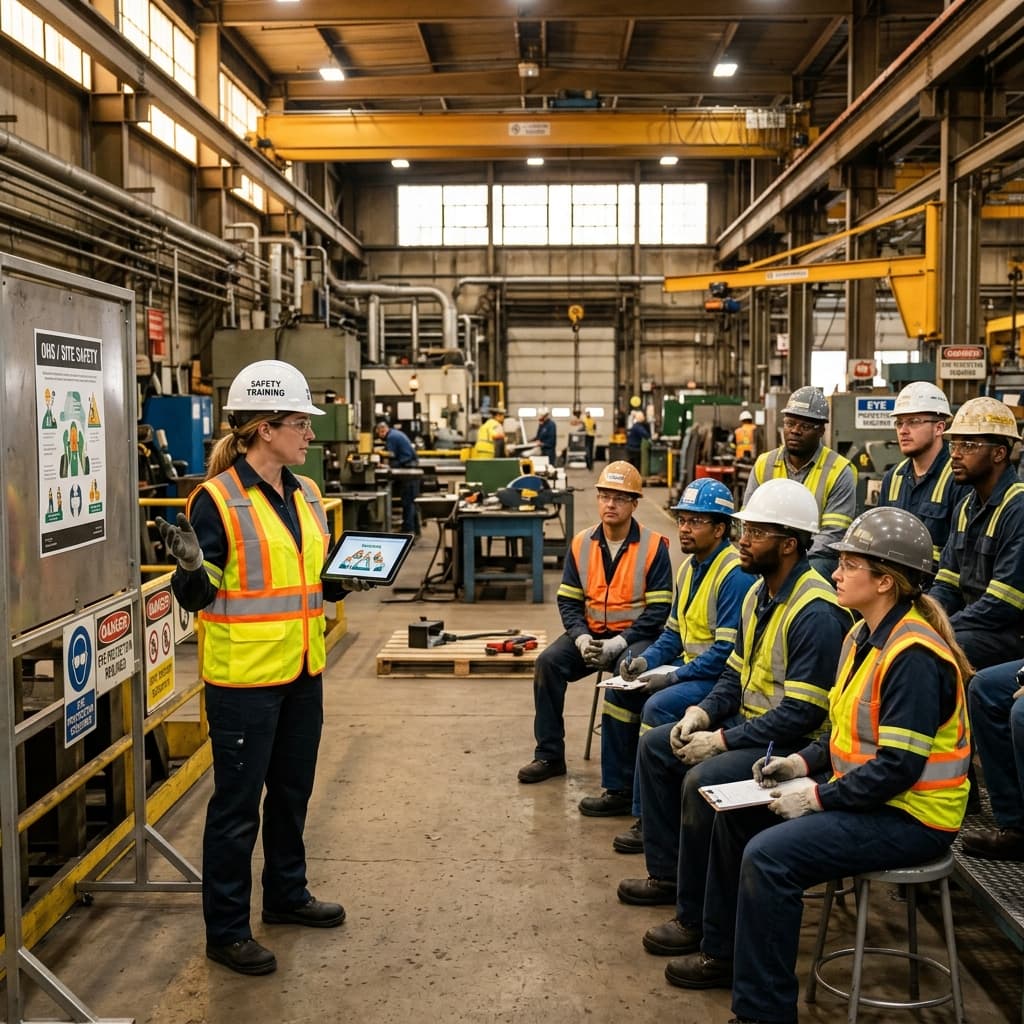
Onsite Safety Training Session
Your Safety. Our Mission.
At BHG Safety Partners, we provide customized safety consulting services that protect your workforce, reduce liability, and ensure full regulatory compliance. With decades of hands-on experience across construction, manufacturing, oil & gas, and general industry — we bring the expertise your team needs.
Our approach is simple: we listen first. Every business faces unique hazards and operational pressures. We tailor every training program, audit, and consultation to fit your exact environment — so you're never paying for a one-size-fits-all solution.
From OSHA compliance and industrial hygiene surveys to onsite safety inspections and written safety program development, BHG Safety Partners is the trusted partner companies across Texas and nationwide rely on to keep their people safe and their operations running.
Get in Contact with us Here!
Fill out the form below and we'll be in touch within one business day.