
Hazard Communication Training
HazCom and GHS training covering labels, safety data sheets and your written program, per the 29 CFR 1910.1200 right-to-know requirements.
What to Expect
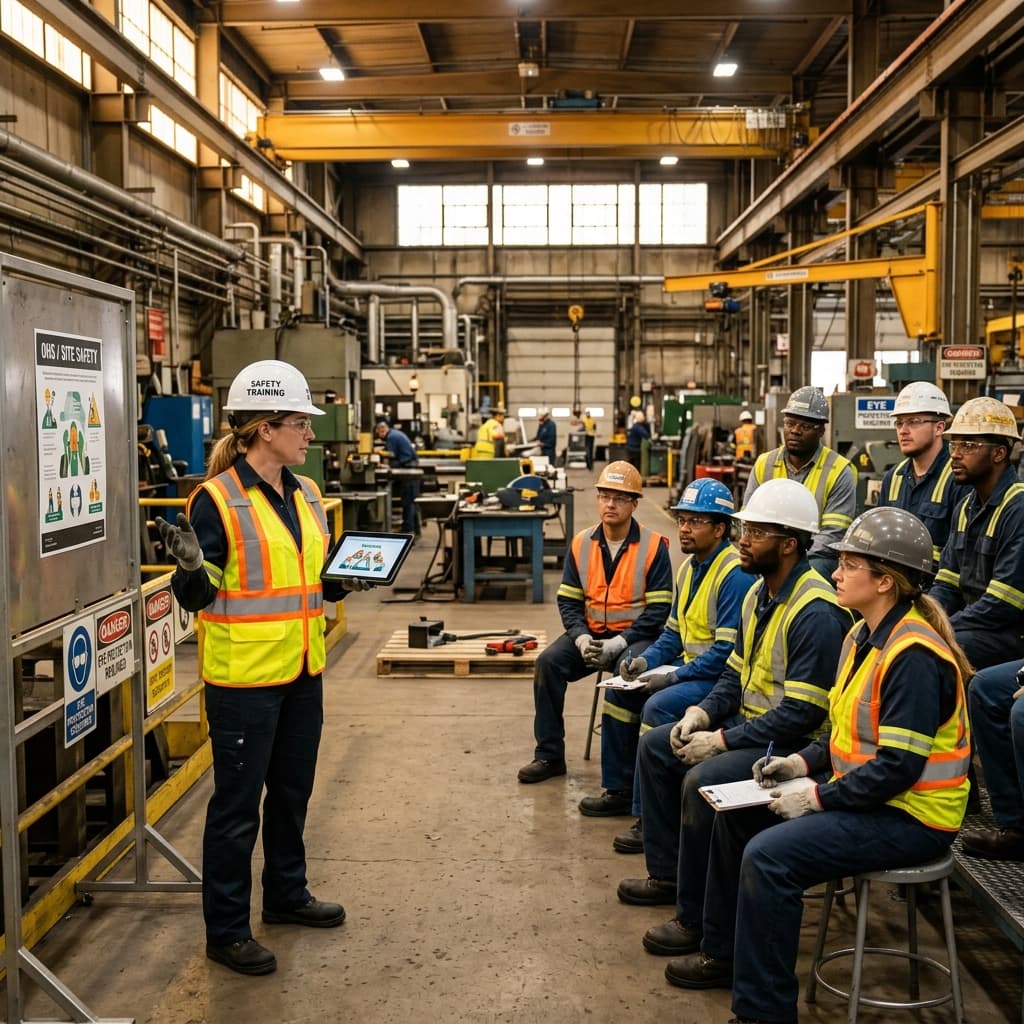
Hazard communication is among the most frequently cited OSHA standards year after year, usually because the written program is missing, out of date, or nobody can find the safety data sheets. We train your workers on GHS labels, pictograms and safety data sheets, and review the written program and chemical inventory that the standard requires you to maintain alongside the training.
- Standard
- 29 CFR 1910.1200 — Hazard Communication
- Who needs it
- Every employee who may be exposed to a hazardous chemical in the workplace
- When
- At initial assignment, and again whenever a new chemical hazard is introduced into their work area
- Format
- Delivered onsite at your facility or job site, or by live virtual session with Q&A and documentation.
Training is only one of three obligations
The standard requires a written hazard communication program, a chemical inventory with labels and safety data sheets kept accessible, and employee training. Citations often follow a site that has trained its people but cannot produce the written program, or that has safety data sheets locked in an office nobody can reach on a night shift. We look at all three together, because training alone will not close the gap.
Reading a safety data sheet quickly
Safety data sheets follow a standard sixteen-section format, which means a worker who knows where to look can find first aid measures, handling requirements and exposure controls in seconds. Most of the training value is in practising that navigation on the sheets for the chemicals actually in your building, rather than a generic example.
What the course covers
- Right-to-know requirements and the written hazard communication program
- GHS label elements — pictograms, signal words, hazard and precautionary statements
- The sixteen-section safety data sheet format and how to navigate it
- Physical and health hazard classifications
- Chemical inventory and where safety data sheets must be kept
- Routes of exposure and recognising the effects of overexposure
- Protective measures, controls and personal protective equipment
- Secondary container labelling and in-plant labelling systems
- Written Program Review
- GHS Label Training
- SDS Navigation Practice
- Your Actual Chemical Inventory
- Addresses a Top-Cited Standard
- Onsite or Virtual Delivery
Trusted Since 2014
Disabled Veteran-Owned Small Business — serving clients nationwide.
Request a Free Consultation
Fill out the form below and we'll be in touch within one business day.
Other courses we deliver
- Workplace Safety TrainingHands-on and classroom safety training to build worker awareness and support OSHA-aligned job performance.
- Forklift Operator CertificationOSHA-compliant powered industrial truck training and evaluation for forklift operators, built around 29 CFR 1910.178(l).
- OSHA 10-Hour ConstructionTen-hour construction safety training covering the Focus Four hazards and the 29 CFR 1926 requirements entry-level crews work under.

What Our Clients Said
- Expert Safety Training
- Customized Safety Programs
- OSHA Compliance Support
- Industrial Hygiene Surveys
- Onsite Safety Inspections
- Written Safety Program Development
“Brad and his team are very helpful and knowledgeable. They came to our job site and conducted safety training that was not only thorough and compliant, but genuinely engaging for our crew. I highly recommend BHG Safety Partners to any company that takes workplace safety seriously.”
Hazard Communication Training Questions
We get a lot of the same great questions from new clients. Here are the answers to the ones we hear most often — if yours isn't listed, don't hesitate to reach out directly.
Onsite Safety Training Session