
OSHA 10-Hour General Industry Training
Ten-hour general industry safety training for entry-level workers in manufacturing, warehousing and distribution, built on 29 CFR 1910.
What to Expect
The general industry 10-hour course covers the hazards found in manufacturing plants, warehouses, distribution centres and similar workplaces. Where the construction course centres on the Focus Four, the general industry course spends its time on machine guarding, electrical safety, hazard communication, walking and working surfaces, and the other 29 CFR 1910 subparts that shape day-to-day work on a plant floor. It is aimed at workers rather than supervisors.
- Standard
- 29 CFR 1910 — General industry standards
- Who it's for
- Entry-level workers in manufacturing, warehousing, distribution and similar operations
- Emphasis
- Machine guarding, electrical safety, hazard communication and walking/working surfaces
- Format
- Delivered onsite at your facility or job site, or by live virtual session with Q&A and documentation.
Different hazards to a construction site
A plant floor and a job site fail in different ways. General industry training concentrates on fixed equipment, machine guarding, powered industrial trucks, permit-required confined spaces and chemical exposure, because those are the hazards that put people in the hospital in a manufacturing or warehouse setting. Choosing the general industry course over the construction one matters: the subparts, the terminology and the examples are all different.
Matched to your operation
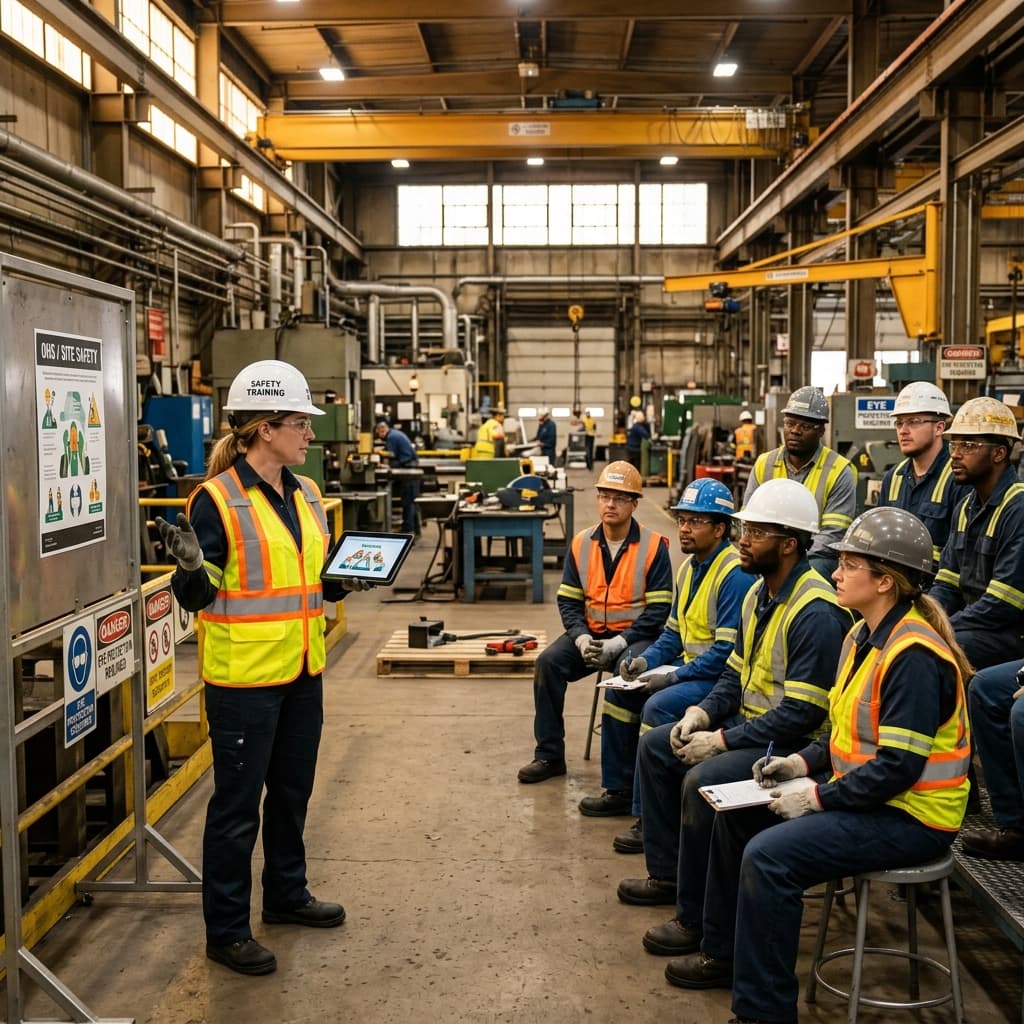
We deliver the course at your facility wherever we can, and use the equipment, chemicals and processes your people work with as the worked examples. Workers retain a machine guarding discussion far better when it is about the press they run rather than a stock photograph.
What the course covers
- Introduction to OSHA, worker rights and employer responsibilities
- Walking and working surfaces, including slips, trips and falls
- Exit routes, emergency action plans and fire prevention
- Electrical safety and lockout/tagout
- Machine guarding and safeguarding requirements
- Hazard communication and the GHS labelling system
- Personal protective equipment selection and use
- Materials handling, storage and powered industrial trucks
- Built on 29 CFR 1910
- Entry-Level Appropriate
- Machine Guarding Coverage
- Delivered at Your Facility
- Examples From Your Operation
- Onsite or Virtual Delivery
Trusted Since 2014
Disabled Veteran-Owned Small Business — serving clients nationwide.
Request a Free Consultation
Fill out the form below and we'll be in touch within one business day.
Other courses we deliver
- Workplace Safety TrainingHands-on and classroom safety training to build worker awareness and support OSHA-aligned job performance.
- OSHA 30-Hour General IndustryThirty-hour general industry training for supervisors and safety leads, covering hazard control and employer duties under 29 CFR 1910.
- HAZWOPER TrainingHAZWOPER 40-hour, 24-hour, 8-hour supervisor and annual refresher training for hazardous waste and emergency response work, per 29 CFR 1910.120.
What Our Clients Said
- Expert Safety Training
- Customized Safety Programs
- OSHA Compliance Support
- Industrial Hygiene Surveys
- Onsite Safety Inspections
- Written Safety Program Development
“Brad and his team are very helpful and knowledgeable. They came to our job site and conducted safety training that was not only thorough and compliant, but genuinely engaging for our crew. I highly recommend BHG Safety Partners to any company that takes workplace safety seriously.”
OSHA 10-Hour General Industry Questions
We get a lot of the same great questions from new clients. Here are the answers to the ones we hear most often — if yours isn't listed, don't hesitate to reach out directly.
Onsite Safety Training Session